10.1 Histograms and density plots
Histograms and density plots are both visualizations of the distribution of quantitative variables.
10.1.1 Histogram
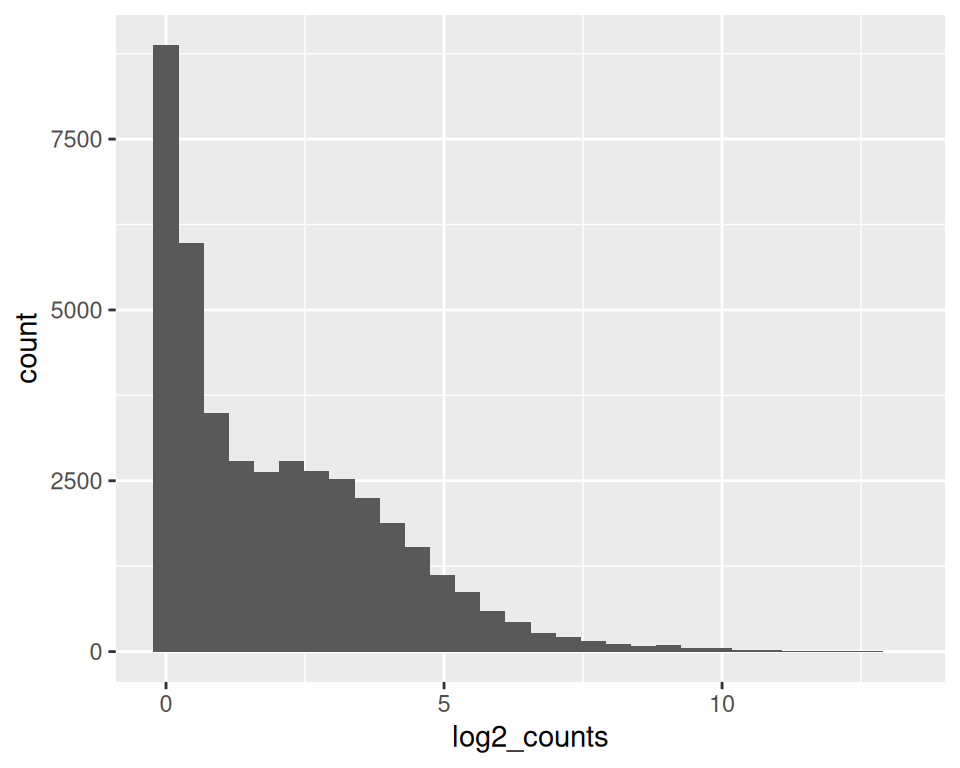
We will use a previous object to create a histogram, with geom_histogram. You can get it back with:
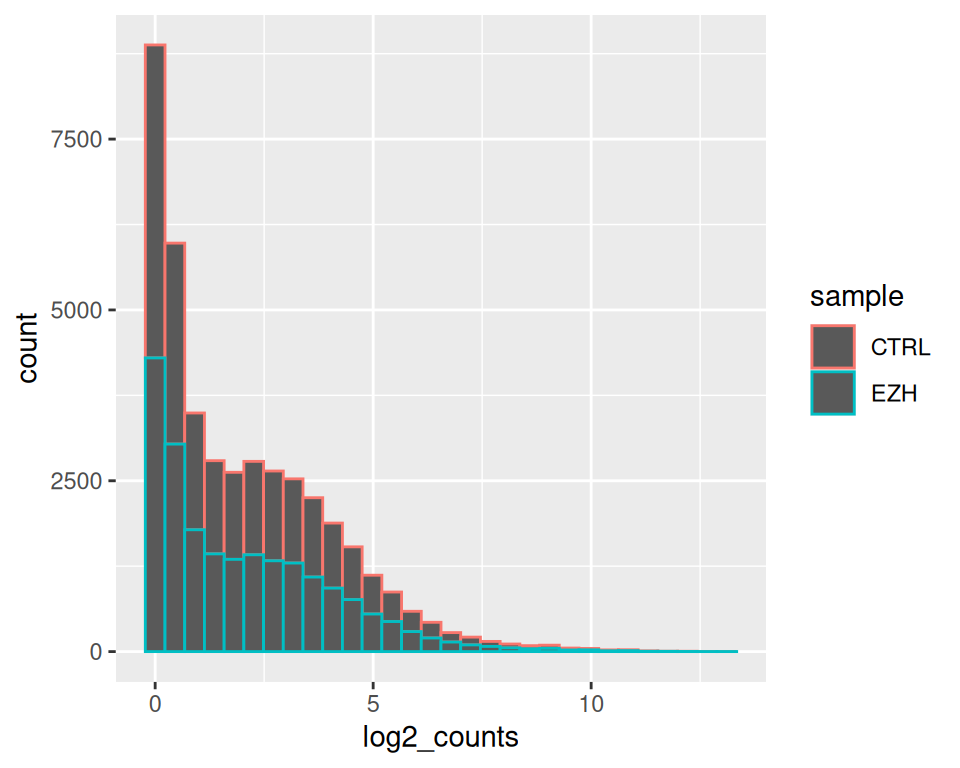
Split the histogram per sample:
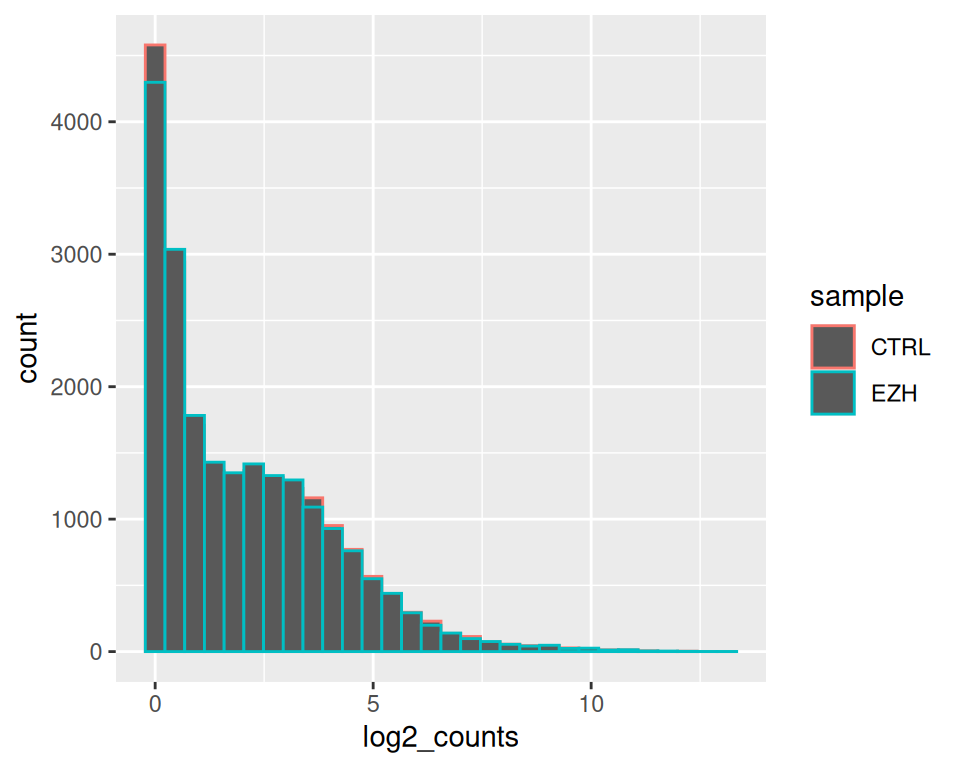
Set position to “identity”: histograms will not be “on top of each other” but on a comparative scale:
Set alpha (transparency to 0.2):
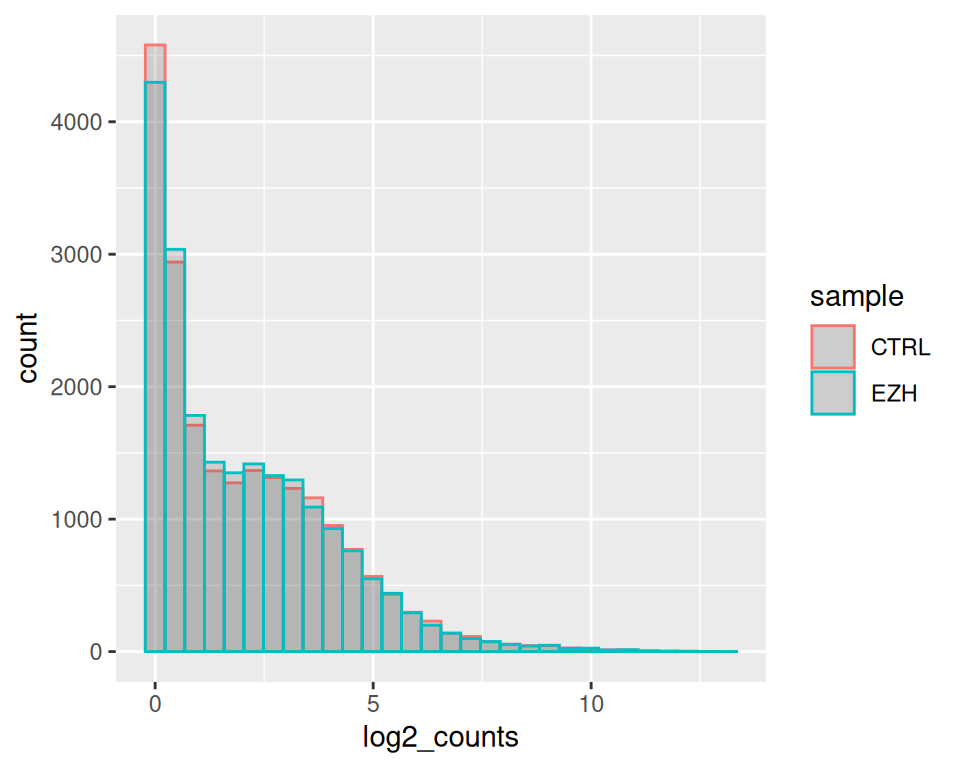
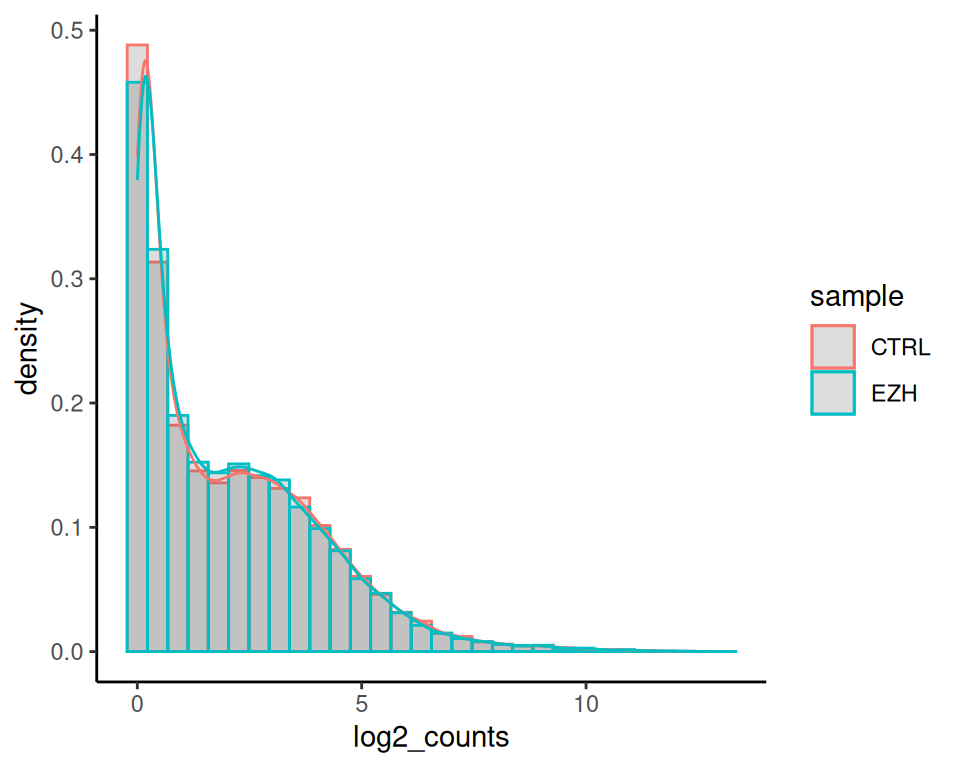
Express as density instead of counts:
ggplot(rnaseq2, aes(x=log2_counts, color=sample)) +
  geom_histogram(aes(y=after_stat(density)), position="identity", alpha=0.2) +
  theme_classic()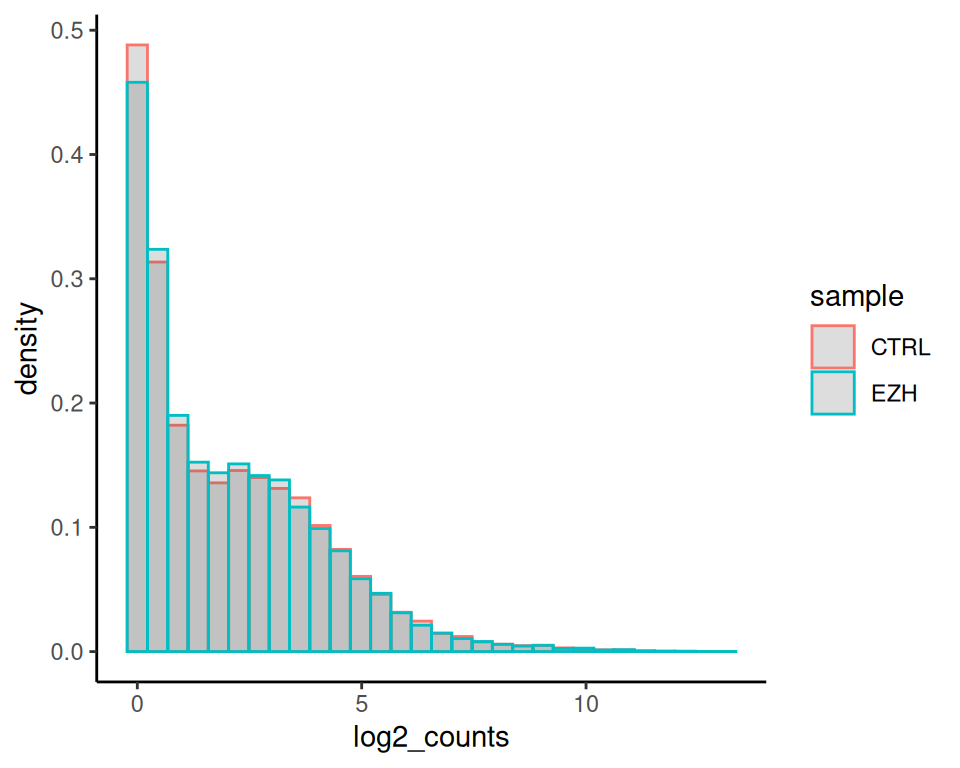
10.1.2 Density plot
It is similar to create a density plot, using geom_density:
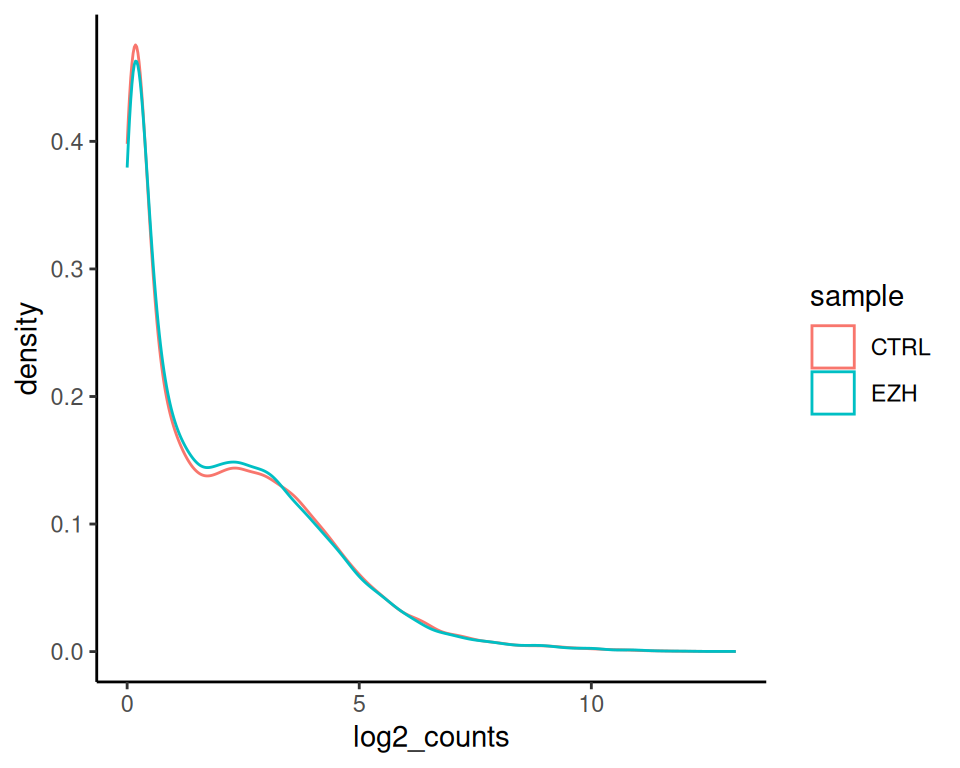
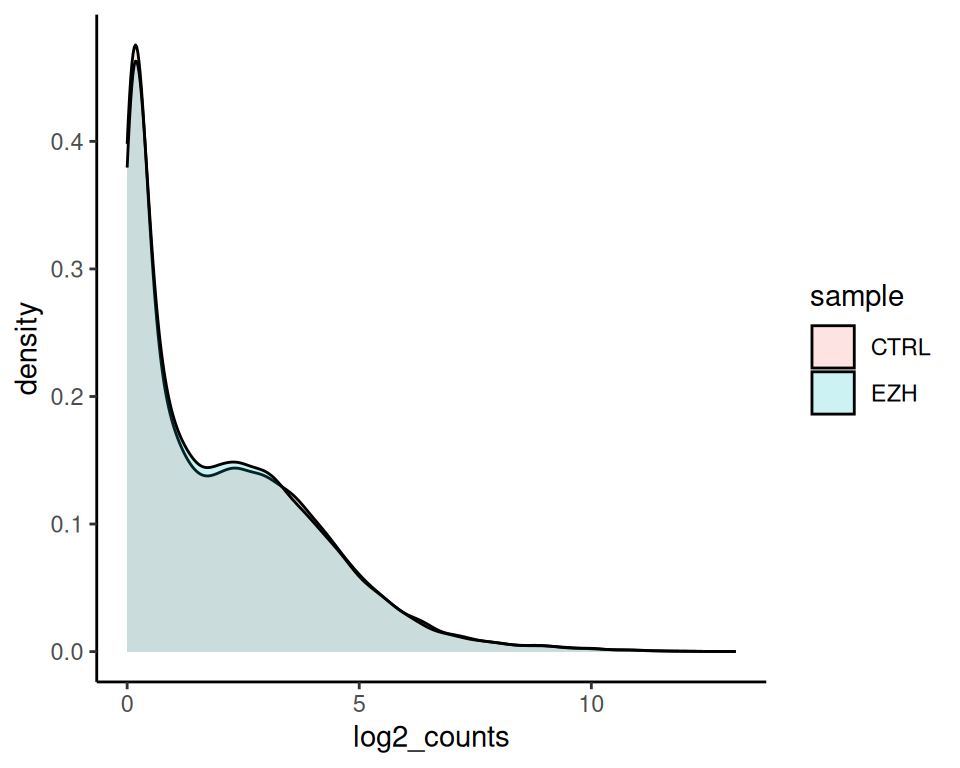
You can use fill instead:
10.1.3 Histogram + density
As we combined geom_boxplot and geom_violin in a previous exercise, we can also combine geom_histogram and geom_density:
ggplot(rnaseq2, aes(x=log2_counts, color=sample)) +
  geom_histogram(aes(y=after_stat(density)), position="identity", alpha=0.2) +
  geom_density(alpha=0.2) +
  theme_classic()